A closer measurement
Fat quality on CT after tesamorelin
The intriguing finding concerns the fat that remains. Both deep abdominal fat and fat beneath the skin changed in CT density.
The 2021 fat-density study
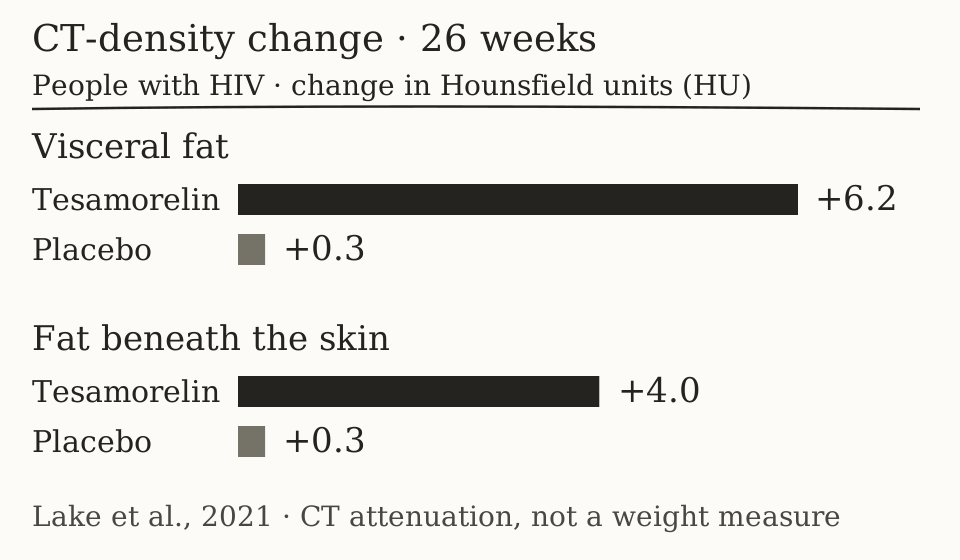
The Lake and colleagues paper examined people with HIV over 26 weeks. Tesamorelin increased CT density in visceral and subcutaneous fat, and the quality finding persisted after accounting for changes in fat quantity.
CT attenuation describes how tissue interacts with the X-ray beam; its numerical scale uses Hounsfield units, abbreviated HU. In this paper, the higher attenuation was interpreted as improved fat quality. It provides another way to describe the tissue beyond the space it occupies.
I initially had a rather inert picture of fat in mind: storage that could either grow or shrink. This paper gives that picture some texture. Quality seems too expansive a word to me if it stands for health generally; the measurement here remains CT density.

Density changes at 26 weeks
Visceral-fat density increased by 6.2 HU with tesamorelin versus 0.3 HU with placebo. Subcutaneous-fat density increased by 4.0 HU versus 0.3 HU. Both comparisons had P<0.0001.
The subcutaneous result is the one I return to: tissue beneath the skin changed even though the major quantity findings emphasize selective loss of visceral fat.
The fat beneath the skin
The pivotal quantity study found selective visceral-fat reduction while preserving subcutaneous fat. The density analysis then measured a property of both compartments.
There is no contradiction in those findings. Amount and attenuation answer different questions about the same tissue. I think the density result deserves attention precisely because a weight change would conceal it.
The tempting leap is to treat denser fat as proof of fewer future illnesses. The paper's scan outcome does not establish that. Long-term clinical outcomes would give the word quality a firmer practical meaning.
Adiponectin and inflammation
Another HIV analysis of inflammatory markers found reduced tissue plasminogen activator antigen, a clot-related marker, and a modest increase in adiponectin, a hormone involved in insulin sensitivity. Marker changes correlated with the extent of visceral-fat reduction.
I see these as companion observations, useful for asking what happens as fat changes. They offer no shortcut to claiming that tesamorelin directly treats inflammation. The amount of visceral fat lost may mediate the marker changes.
The liver-tissue findings pursue a related question inside an organ: which cellular pathways change when measured fat falls? That connection between fat quantity and cellular pathways is the most intriguing question from my perspective.